How to Double a Recipe: A Clear Scaling Method
How to double a recipe with one multiplier, a worked four-to-eight serving example, and a checklist for fractions, baking pans, and saving scaled recipes.
By Ultimate Meal Planner by Cosmo Suite · Editorial policy
Published · 7 min read
General information, not medical or nutrition advice.
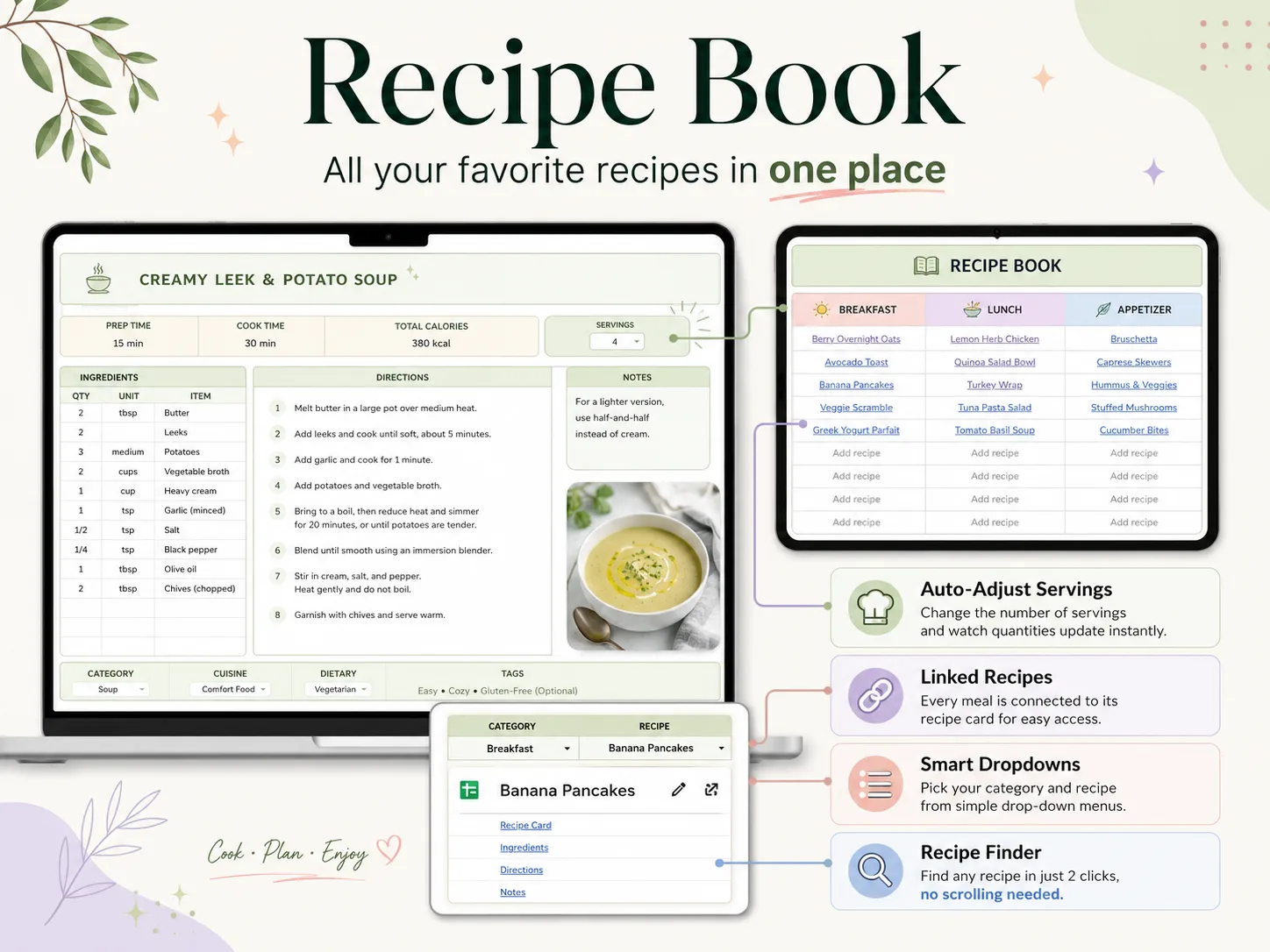
The worked example uses the sample recipe card in our Recipe Book.
You invite two more people for dinner, then notice the recipe serves four. The arithmetic is easy. The awkward part is figuring out whether every ingredient, pan, and cooking step should change in the same way.
To double a recipe, multiply each ingredient by two. For another serving count, divide the servings you want by the recipe's original yield, then multiply every ingredient by that result. The method below keeps those calculations together and shows where you still need to use the recipe's own instructions.
How to Double a Recipe with One Multiplier
Recipe scaling is changing ingredient quantities to match a new yield. Use the same multiplier for every ingredient: target servings divided by original servings. If a recipe serves four and you want eight, the multiplier is 8 ÷ 4, or 2. The sample Recipe Book card for Creamy Leek and Potato Soup starts at four servings. Its listed quantities provide a concrete way to check the multiplier arithmetic. The amounts below are calculations from that card, not a tested recipe at either yield.
| Ingredient from the four-serving sample card | Four servings | Eight servings (×2) |
|---|---|---|
| Butter | 2 tbsp | 4 tbsp |
| Leeks | 2 | 4 |
| Medium potatoes | 3 | 6 |
| Vegetable broth | 2 cups | 4 cups |
| Heavy cream | 1 cup | 2 cups |
| Minced garlic | 1 tsp | 2 tsp |
| Salt | 1/2 tsp | 1 tsp |
| Black pepper | 1/4 tsp | 1/2 tsp |
| Olive oil | 1 tbsp | 2 tbsp |
| Chopped chives | 2 tbsp | 4 tbsp |
Write the original yield and new yield above the ingredient list. That small note helps if you come back to the page later and wonder which column you meant to use. Multiply the quantity first. Convert to a different unit only if the result is hard to measure.
For a one-step doubling, the multiplier is two. For tripling, it is three. When a recipe moves between different serving counts, calculate the ratio instead of guessing. A recipe that serves four and needs to serve eight uses 8 ÷ 4. A recipe for three that needs to serve six uses 6 ÷ 3. Both produce the same multiplier, even though the starting yield differs.
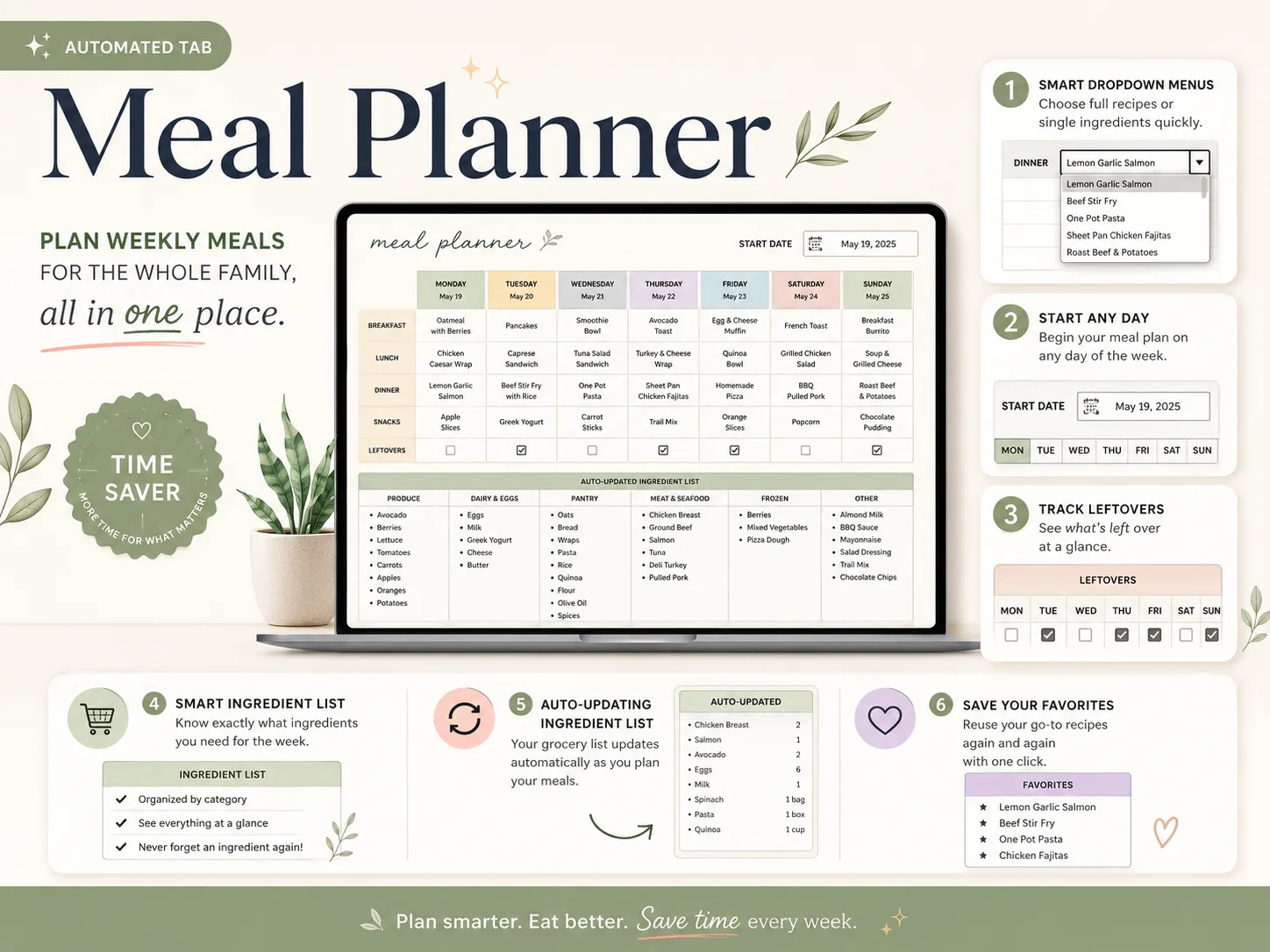
If you save recipes in one place, keep the original version and make the serving change visible in your notes. The meal planner template and weekly planning example show how recipe choices can sit beside a plan for the week. Ultimate Meal Planner is a one-time spreadsheet by Cosmo Suite, not a subscription, and its Meal Planner includes auto-adjusting servings.
How to Scale a Recipe to a Different Number of Servings
For a recipe that needs six servings instead of four, divide six by four. The answer is 1.5, so multiply each ingredient by one and a half. You do not need to double the whole recipe just because the number of servings changed.
Here is how that multiplier works with simple measures:
| Ingredient from the four-serving sample card | Four servings | Six servings (×1.5) |
|---|---|---|
| Butter | 2 tbsp | 3 tbsp |
| Leeks | 2 | 3 |
| Medium potatoes | 3 | 4 1/2 |
| Vegetable broth | 2 cups | 3 cups |
| Heavy cream | 1 cup | 1 1/2 cups |
| Minced garlic | 1 tsp | 1 1/2 tsp |
| Salt | 1/2 tsp | 3/4 tsp |
| Black pepper | 1/4 tsp | 3/8 tsp |
| Olive oil | 1 tbsp | 1 1/2 tbsp |
| Chopped chives | 2 tbsp | 3 tbsp |
The half potato is a useful reminder that arithmetic can produce an amount you cannot use as a whole item. Keep the calculation visible, then decide how to handle the remainder in the actual dish. If a recipe gives a yield in pieces, bowls, or servings, use the unit it provides. If the yield is vague, decide what one serving means before you multiply. A clear starting point makes the new amount easier to check.
Rounding whole items
First, 4 1/2 potatoes means four whole potatoes plus half of another. Then choose whether to use that amount or round based on the dish and available potatoes. The recipe determines what rounding does to texture and yield. So keep the multiplier unchanged; rounding is a separate cooking choice.
The pepper calculation is 3/8 teaspoon. Most basic sets do not include that measure. For example, combine 1/4 teaspoon and 1/8 teaspoon, or season to taste when the recipe allows. The source card lists the original four-serving amount.
A short worksheet can prevent a skipped ingredient:
- Write the recipe's original yield.
- Write the number of servings you want.
- Divide the new yield by the original yield.
- Multiply each ingredient quantity by that number.
- Review the method, pan, and cooking cues separately.
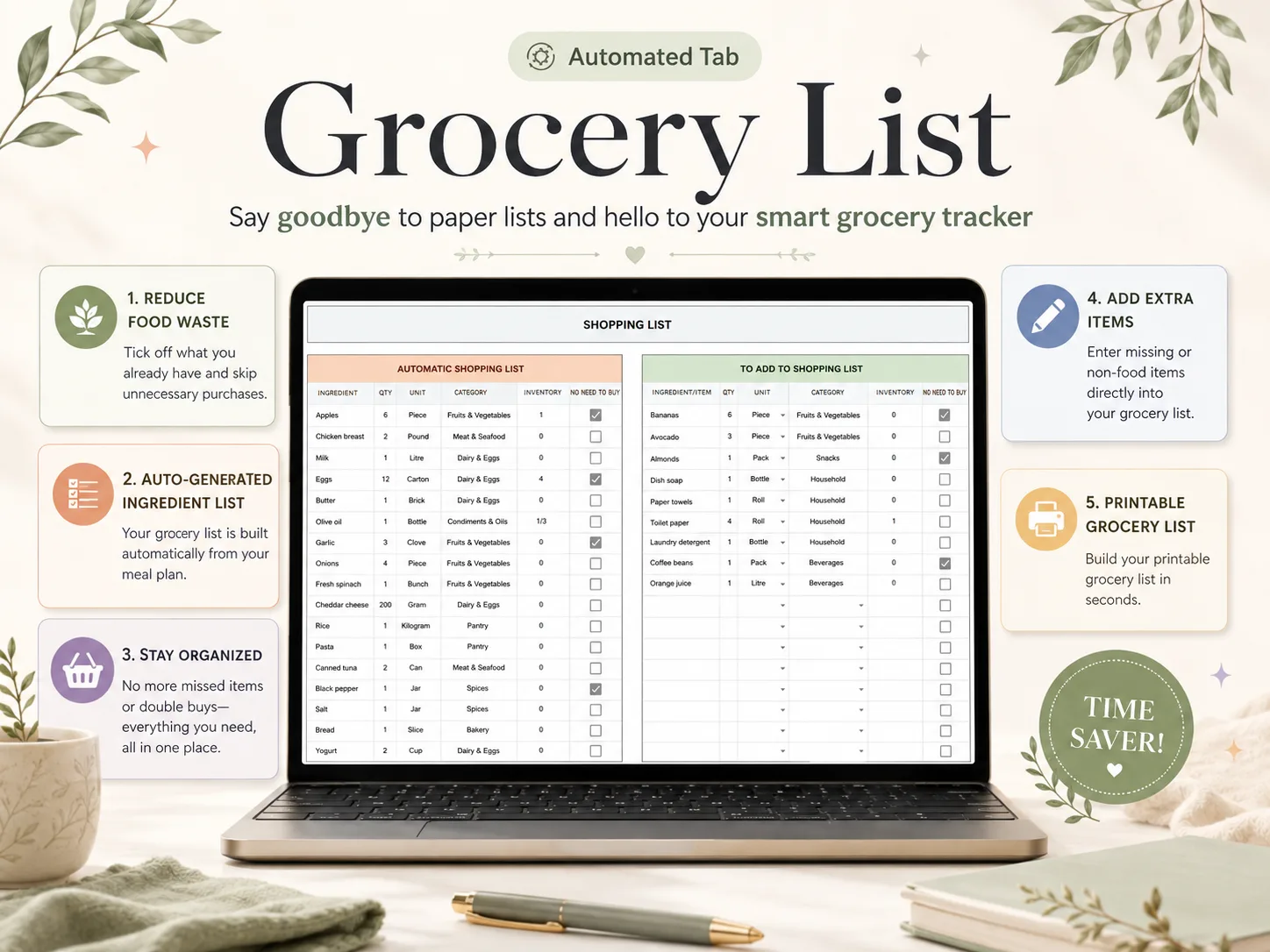
Keep the multiplier beside the adjusted list. When a recipe has several ingredients, it is easy to lose track of whether you already changed a quantity. Mark each row as you go, or place the old and new amounts in separate columns. A grocery list template can help keep the final amounts together for the shop.
What to Do with Fractions and Small Amounts
Multiply the fractions before you round. For a doubled recipe, 1/2 cup becomes 1 cup, 1/3 cup becomes 2/3 cup, and 1/4 teaspoon becomes 1/2 teaspoon. For a 1.5 multiplier, 1/2 cup becomes 3/4 cup. Keeping the fraction visible makes the arithmetic easier to check.
When the result is unfamiliar, convert it after the calculation. For example, 1 1/2 cups may be easier to measure as one cup plus one-half cup. Use the same unit as the original recipe when possible. Switching from cups to grams or ounces can introduce another conversion, so do it only when it solves a real measuring problem.
Small amounts deserve an extra look. Multiplying a pinch, a small spice measure, or a strong flavoring exactly may give you a reasonable starting amount, but taste and recipe method still matter. When the recipe allows, add a little at a time and adjust. This is a kitchen judgment, not a separate scaling formula.
Do You Double Cooking Time or Change the Pan?
Ingredient quantities follow the multiplier. Pan size, oven time, and cooking method do not follow a universal multiplier. A deeper or more crowded pan can change how a dish cooks, so check the recipe's method and use its visual or temperature cues rather than assuming the time should double.
For a stovetop dish, a larger batch may need a wider pot or more room to stir. If the ingredients crowd the pan, divide the batch and cook it in rounds. If the recipe depends on browning, give the food room rather than stacking it all together. The quantity math remains the same even when the equipment changes.
Baking needs more care because pan shape and depth affect the result. First, King Arthur Baking's half-sheet pan guide treats pan area separately (checked 26 Oct 2026). That guidance covers specific recipes and pans. So use it only when those details fit your recipe.
Measurements can vary when a recipe uses volume. For example, King Arthur Baking's Recipe Success Guide recommends a scale (checked 26 Oct 2026). It gives 120 grams per cup for its own all-purpose flour. That value is specific to its flour and method. When a recipe provides weights, use those weights consistently. When it does not, use its stated volume measure. Avoid a second conversion unless you need one.
If the original recipe is written for one pan and the doubled amount will not fit, use two pans or bake in batches. Keep an eye on the recipe's cues as it cooks. The amount of batter, depth, and pan arrangement may change how long it takes. Use the recipe's time as a starting point and follow its cues.
Keep the Original Recipe and the Scaled Version Clear
Keep both yields visible when you save a change. Record the original servings, the new servings, and the multiplier next to the adjusted quantities. This makes it easier to return to the version you know, or scale it again next week without multiplying an already adjusted list by mistake.
If you plan meals from saved recipes, make the serving size part of the weekly plan. Check the adjusted list against what you already have before you shop. This is also where the pantry inventory guide helps: it shows a simple way to compare the plan with ingredients on hand. For the next step, a weekly meal planner example shows how to map recipe choices across the week.
An auto-adjusting serving control can take care of quantity updates in a planner. You still choose the recipe, check the recipe's instructions, and decide how to handle the pan and cooking time. If you want to see how the product handles serving changes, review Ultimate Meal Planner's contents.
Where Ultimate Meal Planner Fits
Ultimate Meal Planner includes a Recipe Book and Meal Planner, and the Meal Planner has auto-adjusting servings. The workbook also includes a Shopping List and Printable Shopping List. Those tabs can support a routine where saved recipes feed a weekly plan and the list follows from the plan.
Ultimate Meal Planner is a one-time spreadsheet by Cosmo Suite, not a subscription. See Ultimate Meal Planner's meal planning spreadsheet if you want to review the product and its contents. The spreadsheet organizes your own meal plan. Recipe importing, food delivery, and nutrition plans are outside its contents.
How We Made This
The ingredient quantities and original yield come from the Creamy Leek and Potato Soup sample card in the Ultimate Meal Planner Recipe Book. The doubled and six-serving columns are arithmetic calculations from that card; we did not test the resulting batches. Product details come from the approved Ultimate Meal Planner contents list. The baking notes link to King Arthur Baking's public guides, which cover measuring and pan choices in their own recipe context. This article does not offer nutrition or medical advice.
Frequently asked questions
How do you double a recipe?
Multiply each ingredient by two when you want twice the original yield. Keep the original method, then check separately whether the pan or cooking time needs to change.
How do I scale a recipe from four servings to six?
Divide the target yield by the original yield: six divided by four is 1.5. Multiply each ingredient by 1.5, then decide how to measure the resulting fractions.
Do I double the cooking time when I double a recipe?
No fixed time multiplier applies to every recipe. A larger batch may need a different pan, more space, or cooking in batches. Use the recipe's own cues and check the food as it cooks.
Should I double spices when I double a recipe?
Use the same multiplier as a starting calculation, then taste and adjust when the recipe allows. Small measures and strong seasonings are easier to add gradually.
How do I double an ingredient measured in fractions?
Multiply the fraction, simplify it, and convert it to a familiar measure only when needed. For example, two times one-half cup is one cup.
Can Ultimate Meal Planner adjust recipe servings?
The Meal Planner includes auto-adjusting servings. Ultimate Meal Planner is a one-time spreadsheet by Cosmo Suite, not a subscription.
