How to Organize a Pantry: Zones That Match Your Kitchen
how to organize pantry shelves around your cooking routines, make a short restock list, and keep it useful in a small cupboard or full pantry.
By Ultimate Meal Planner by Cosmo Suite · Editorial policy
Published · 7 min read
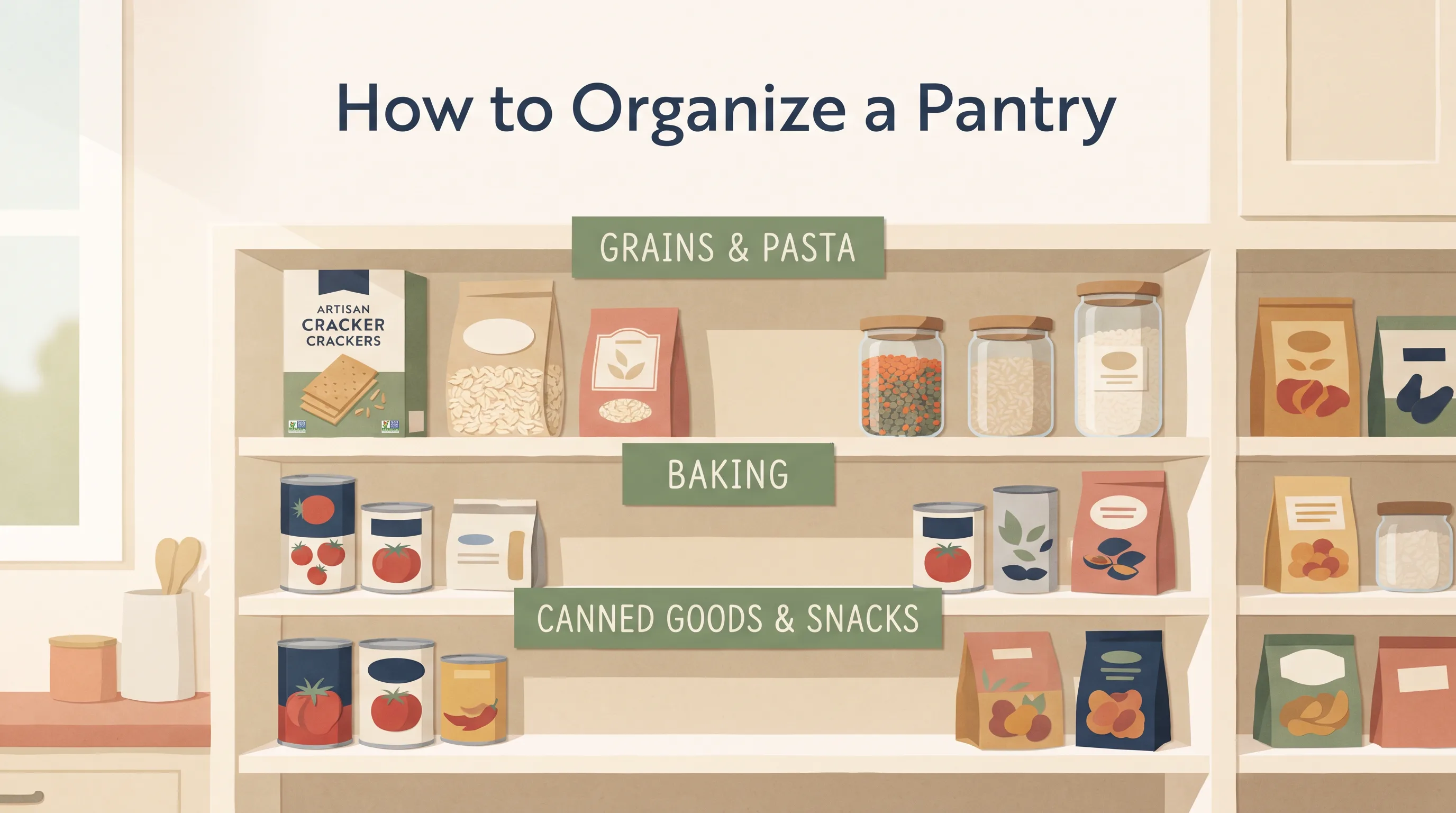
Sunday afternoon, you reach for pasta and find three half-used bags behind the cereal. Give each group a shelf or spot, then keep a short list of what you want to have on hand.
How to organize pantry shelves: group food by how your household uses it, give each group a reliable home, then keep a short list of the items you want to have on hand. The setup can fit one cabinet or a walk-in pantry, with packages in their original containers.
Before You Plan: the key takeaways
- Choose pantry zones around your kitchen routines.
- Keep frequently used items visible and within comfortable reach.
- Write down a minimum-on-hand amount only for items you restock regularly.
- Check your list before shopping, then update it as groceries come in.
A Pantry Organization Plan for One Shelf
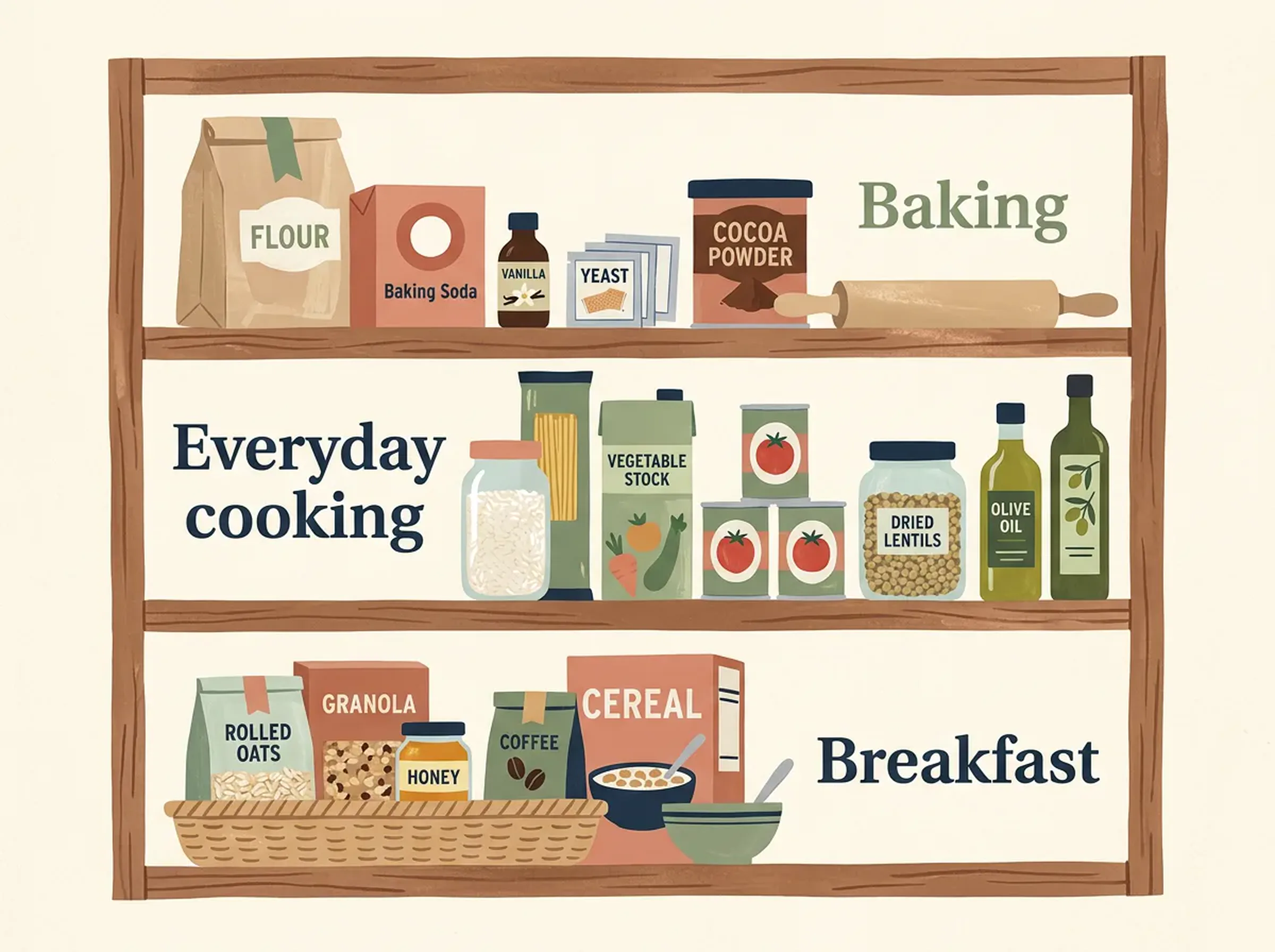
A pantry zone is a named shelf or shelf area for a group of items. Start with a simple map and adjust it to the space you have.
| Shelf area | Zone | What belongs there | Check before you buy |
|---|---|---|---|
| Eye level | Everyday cooking | Rice, pasta, oil, canned tomatoes | Is the open package nearly finished? |
| Upper shelf | Baking and occasional use | Flour, sugar, extracts, specialty ingredients | Will you use it in a planned recipe? |
| Lower shelf | Breakfast and snacks | Oats, cereal, crackers, lunch items | Is there enough for the next few mornings? |
| One small basket | Open packets | Beans, grains, spice packets | Can you see what is inside? |
Use this as a starting map and adjust it for your household. If a shelf is high or awkward to reach, move heavier or frequently used items somewhere more comfortable. If two categories fit together, combine them. A small kitchen may need only “everyday” and “occasional” zones.
The example uses familiar ingredients to show how zones can work. Your household might keep tea, lunch snacks, or baking supplies in a different place. Choose labels that make sense to the people who put things away.
How to Organize Pantry Shelves in Six Steps
You can organize a pantry with the shelves and packages you already have. See what is there, then assign places based on your space and the meals you cook.
- Clear one section at a time. Empty a shelf or cabinet onto a counter. Working in sections leaves the rest of the kitchen usable.
- Group similar items. Put baking items together, then breakfast, snacks, cooking basics, and less-used ingredients. Keep food in its original package when that works.
- Choose a home for each group. Place everyday ingredients where they are visible and comfortable to reach. Put occasional items in less convenient spots.
- Test the arrangement with real packages. Tall boxes may not fit on a low shelf. A deep cabinet may hide items behind the front row. Adjust the zone before you label it.
- Add a container only to solve a problem. A basket can hold loose packets or make a group easier to pull forward. Measure the shelf before buying anything.
- Make a short restock list. Write the few ingredients you want on hand and the point when you want to replace them. Leave the rest off until you learn what your household uses.
Clearing the whole pantry in one afternoon can feel satisfying. Still, a pretty arrangement may not fit anyone's routine. Try one shelf through a normal dinner and shopping trip before using the same setup elsewhere.
If your grocery list is still a separate memory exercise, a grocery list template that builds from the meal plan shows how the planned meals can feed a shopping list.
Choose Zones by the Way You Cook
Pantry zones should follow household routines rather than a standard list of categories. In her 23 January 2026 account of organizing a smaller, closet-style pantry, Kath Eats describes changing the arrangement to suit the space (Kath Eats). Use your own shelf dimensions and habits to make that adjustment.
Breakfast: Put cereal, oats, coffee, tea, and other morning items together if that helps everyone find them. If drinks live elsewhere, keep only the breakfast foods in this zone.
Everyday cooking: Keep the ingredients you reach for often near the counter or cooking area, if the pantry is there. This zone might include rice, pasta, canned goods, oils, or other ingredients your household uses. There is no required list.
Baking: Group the ingredients and tools you use for baking. If baking happens only occasionally, this zone can share space with other less-used items.
Snacks and lunch packing: A basket can work for wrapped snacks or packets that otherwise spread across a shelf. The basket should be easy to reach for the people who use it.
Backstock: Store unopened extras together so they do not disappear behind open packages. Keep this area small enough that you can see what is there. If backstock fills every shelf, the zones stop helping.
Washington State University Extension's pantry guidance recommends taking inventory before shopping and keeping older items visible as new ones come in (WSU Extension). That is a useful test for each category: does this group help someone find something they use, or is it just a shelf label?
Build a Minimum-on-Hand List That You Will Use
A minimum-on-hand list records a small set of ingredients your household prefers to keep available. It helps you notice when a regular item is running low before the next shopping trip.
| Item | Pantry location | Amount on hand | Restock point |
|---|---|---|---|
| Rice | Everyday cooking | 1 open bag | When the open bag is nearly empty |
| Oats | Breakfast | 1 container | Before the next planned breakfast shop |
| Canned tomatoes | Everyday cooking | 2 cans | When one remains |
| Baking powder | Baking | 1 tin | Check before a recipe needs it |
These amounts are examples for explaining the columns. They are not a recommended pantry stock for every home. Your list should reflect what you cook, how often you shop, and the storage space you have.
Start with items you use regularly, not every item on the shelf. Add each product name, where it lives, how much is there, and the point when you want to buy more. You can leave the restock point as a phrase such as “when one is left” instead of turning every package into a calculation.
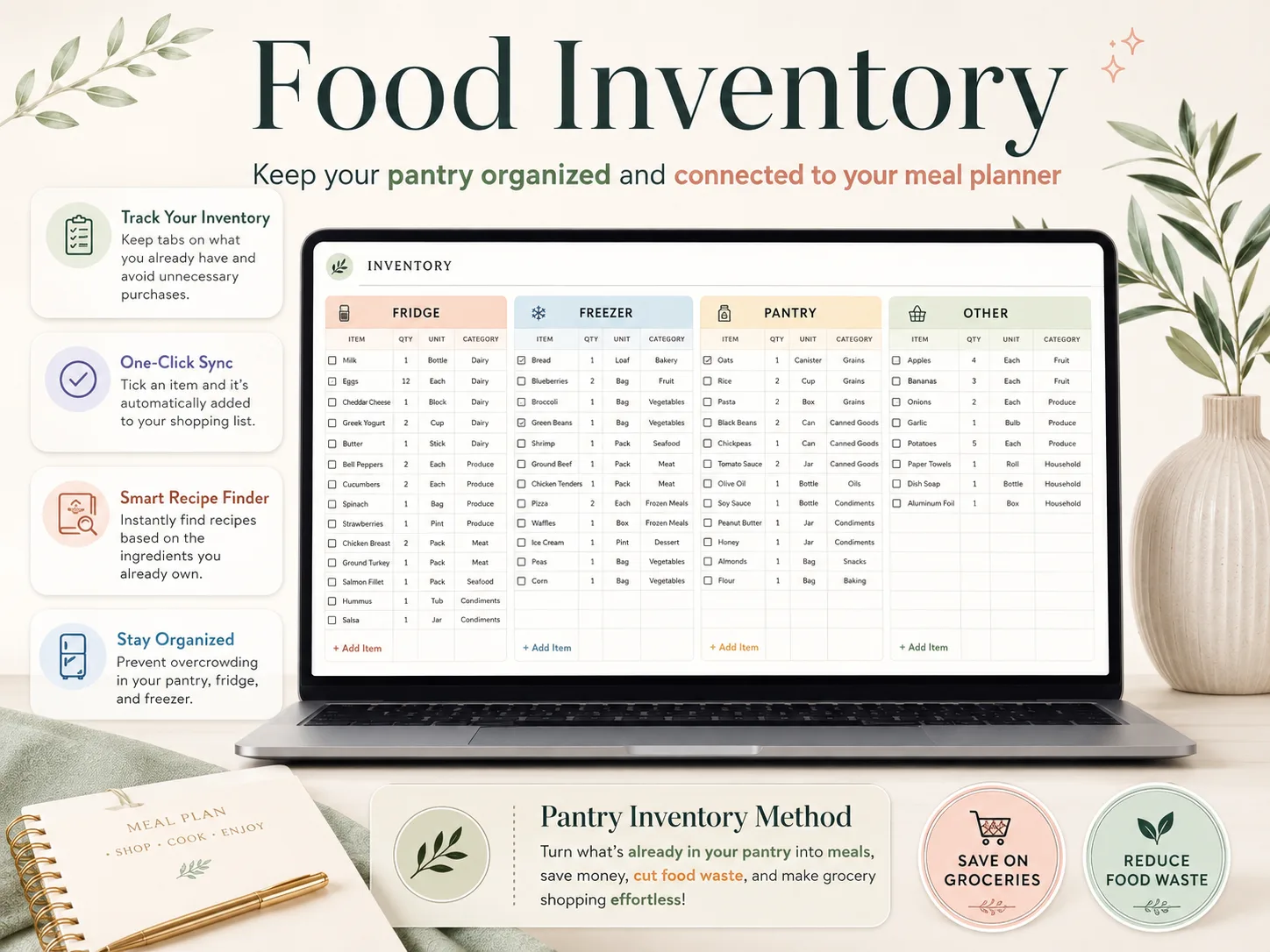
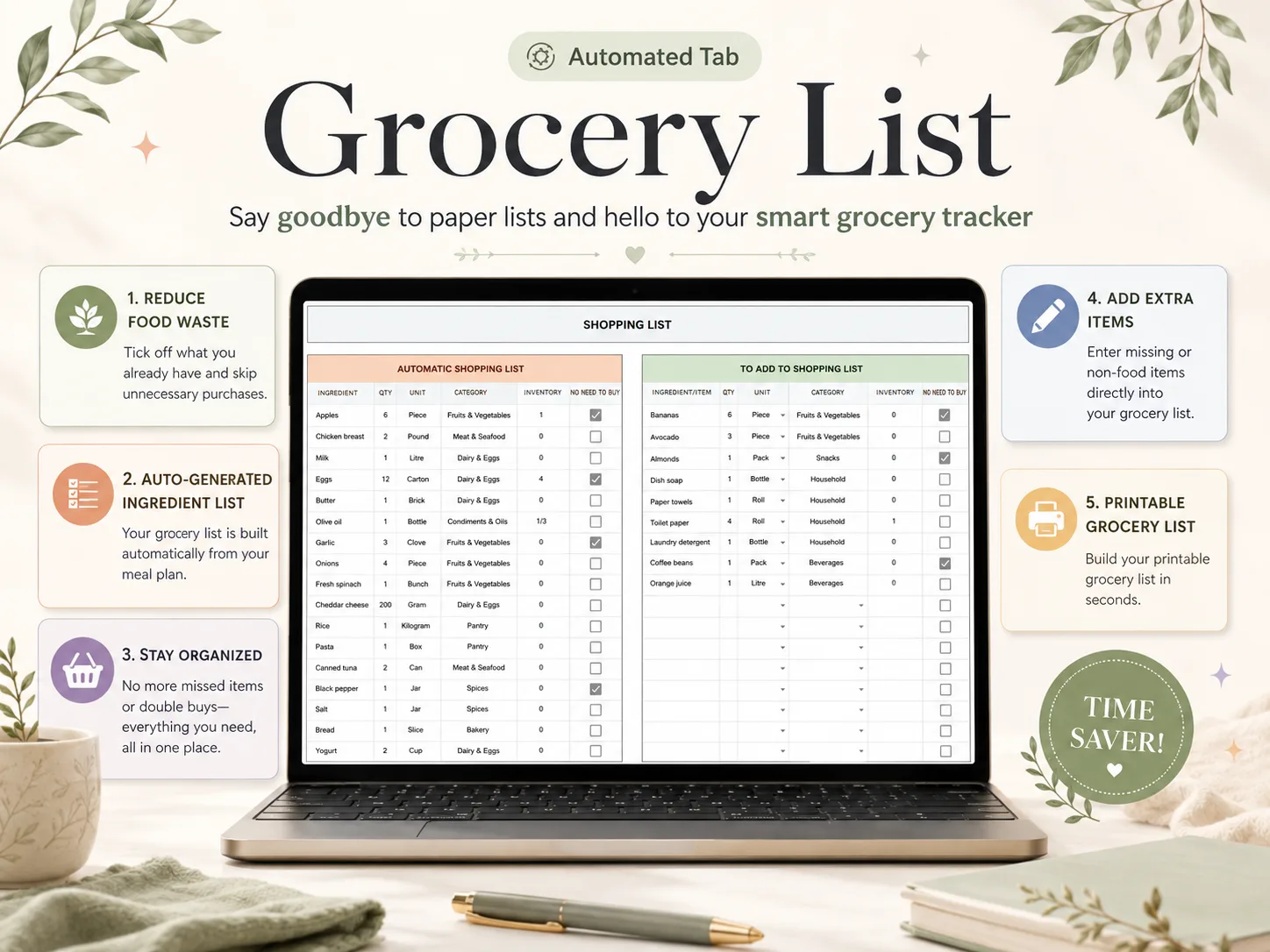
A master list can also reduce duplicate notes. If you want the pantry check to connect to the meals you plan, a meal planner template with a pantry list and grocery list explains the parts of that loop. The Ultimate Meal Planner spreadsheet includes a Food Inventory section and Shopping List tab; the item tracking does not tell you which physical shelf to use.
Keep the Pantry Organized After Shopping
A pantry stays usable when the system includes the moment groceries come home. Put new packages with their matching zone, check the open item, and update your restock list while the bags are still nearby.
- Put the new package behind an older open package when that makes it easier to use the open one first.
- Add an item to the restock list when it reaches your chosen point.
- Move a label or basket if people keep returning things to a different place.
- Remove a zone that nobody uses, or merge it with a nearby group.
These small adjustments show whether the shelf map fits your routine. If the snack basket overflows, give it more room or fewer items. If the baking shelf stays untouched, move it beside other occasional-use ingredients.
A quick look before shopping catches the items on your list. Check again as you put groceries away, and the zones stay current.
Where Ultimate Meal Planner Fits
Ultimate Meal Planner is a one-time spreadsheet by Cosmo Suite, not a subscription. Its Food Inventory section can record pantry items and quantities, while the Shopping List tab is part of the same spreadsheet.
Use the spreadsheet when you need to check what is on hand or what belongs on the shopping list. It does not design pantry shelves, recommend what to keep, or replace a basket label. The shelf zones and inventory cover separate jobs.
If you want a spreadsheet for meal planning, food inventory, and the grocery list, review the product details and decide whether those tabs suit your routine. You can also use the shelf map above with paper, a note on the cabinet door, or a spreadsheet you make yourself.
How We Made This
We checked the pantry examples against the cited Kath Eats article and WSU Extension guide on 16 October 2026. The shelf map and minimum-on-hand table are illustrative examples made for this article, not research findings or a suggested stock list.
The product screenshots show existing Food Inventory and Shopping List tabs. They illustrate digital item tracking; they do not show a physical pantry or prove a specific result. Read the site's About page and editorial policy for more about the publisher.
Frequently asked questions
What are the best pantry zones?
Start with the jobs your pantry serves, such as breakfast, cooking, baking, snacks, and backstock. Combine zones when the shelf space is tight. Use names everyone at home will recognize.
How do I organize a small pantry?
Give each shelf a clear job and keep the zone count small. Put everyday items where they are easy to see and reach. A cupboard can use shelf groups without separate bins.
What should go on the top shelf of a pantry?
Keep less-used items on the top shelf if you can reach them comfortably. Place everyday ingredients at a height that works for the people using the pantry.
Do I need matching containers to organize a pantry?
No. Leave packages as they are when they stack neatly. A basket can gather loose packets or make a shelf easier to pull forward. Matching jars are optional.
How do I keep track of pantry items?
Keep a short list of the items you want on hand and check it before shopping. For a larger pantry, note each item's location, amount, and restock point.
How often should I reorganize my pantry?
Check the shelves as you put groceries away. Give them a fuller reset when items become hard to find. How often you shop and cook will shape the timing.
Can a spreadsheet help organize a pantry?
A spreadsheet can track items and quantities; shelf zones show where they sit. Ultimate Meal Planner has Food Inventory and Shopping List tabs. It does not map physical shelves.
