How to Reduce Food Waste at Home: A Use-It-First Routine
How to reduce food waste at home with a weekly scan, a simple use-first list, flexible meal swaps, and a short reset that keeps food visible.
By Ultimate Meal Planner by Cosmo Suite · Editorial policy
Published · 7 min read
General information, not medical or nutrition advice.
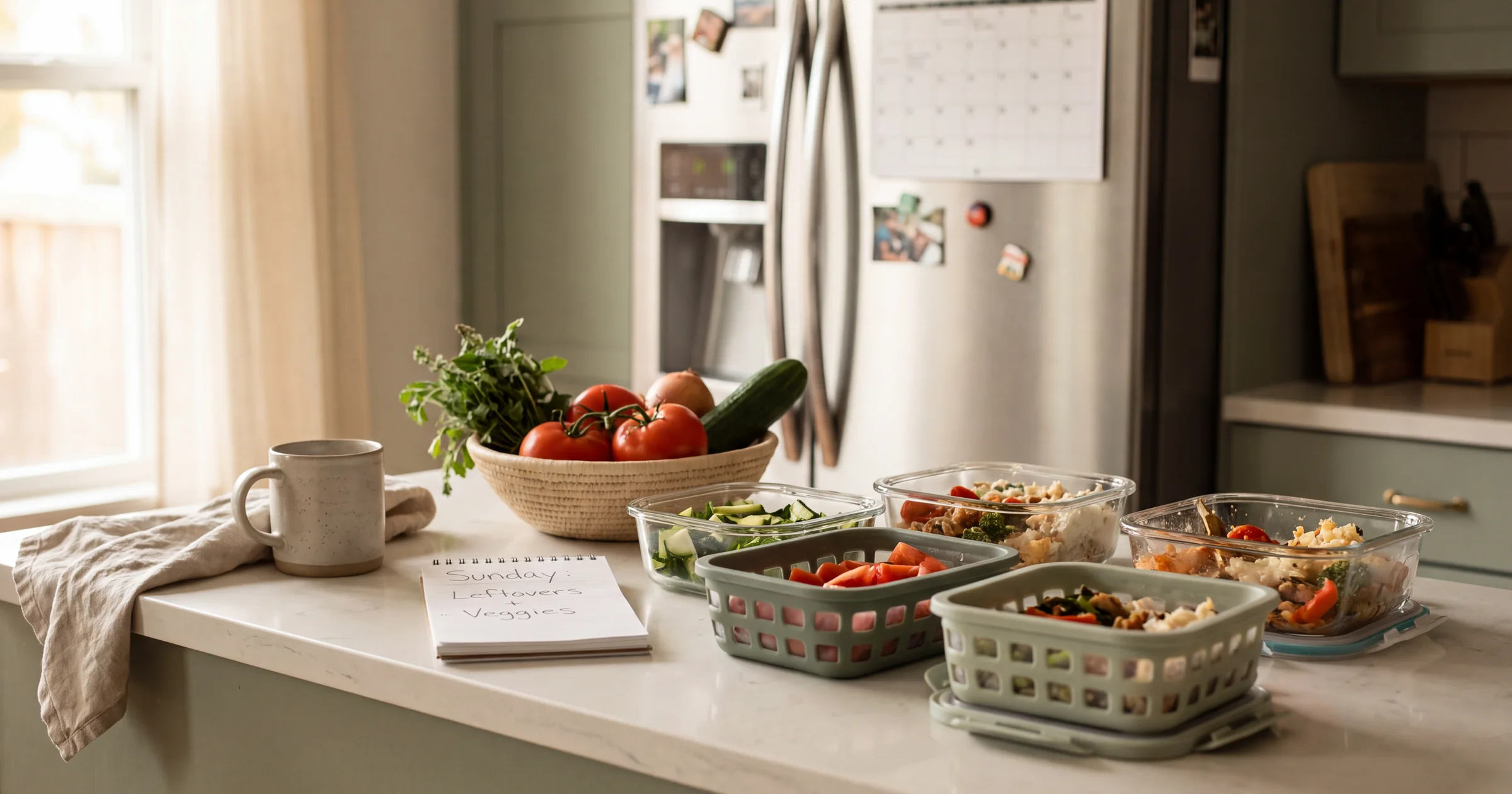
It is Thursday evening. A half-used bag of spinach is behind the milk, rice from Tuesday is in a container, and tomorrow's dinner plan just changed. The problem is not that you forgot how to cook. The food is hard to see, and the plan no longer matches the week.
To reduce food waste at home, make a short use-first list before you shop, then build flexible meals around what is already there. You do not need a perfect inventory or a week of rigid recipes. You need one reliable check that connects your fridge, your meals, and your next shopping list.
Before You Plan: Check what is open or already prepared, choose one or two items to use soon, and leave one flexible meal slot in the week. Follow official storage and food-safety guidance for individual foods.
A use-first routine is a short check that finds food you already have, gives it a next step, and updates your shopping list before you buy more. It is not a full kitchen inventory or a guide to how long food is safe.
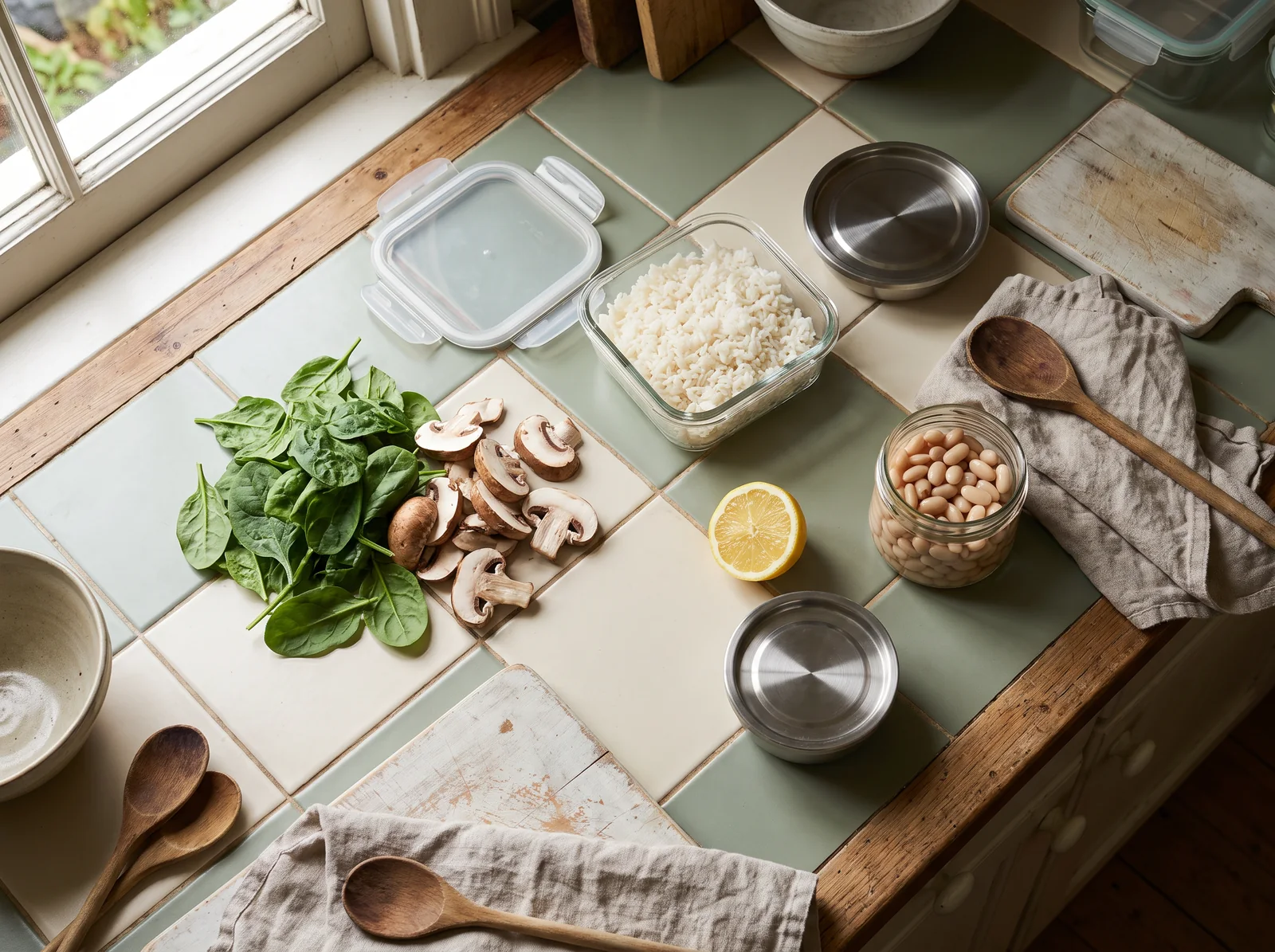
A simple use-first routine for the week
The easiest routine has four moves: scan what you have, choose what to use, match it with a meal, and update the list before shopping. The EPA's home food-waste guidance also recommends checking the refrigerator, freezer, and pantry before buying more. An on-hand list is a short record of food at home that could affect your next meal or shopping decision.
- Scan the fridge, freezer, and pantry for food to use.
- Choose one or two items that can fit upcoming meals.
- Match each item with a meal and a flexible backup.
- Update the shopping list with only what is missing.
| When | What to check | What to write down |
|---|---|---|
| Before planning | Open packages, prepared food, ripe produce | Item and next step |
| While choosing meals | Recipes that can use those items | Meal and day, with a backup |
| Before shopping | Ingredients already on hand | Only the missing items |
| Midweek | Items still waiting and changed plans | Move, freeze if suitable, or remove |
The example is a routine, not a food-safety chart. It does not tell you how long anything keeps. Use official guidance for safe storage and discard decisions.
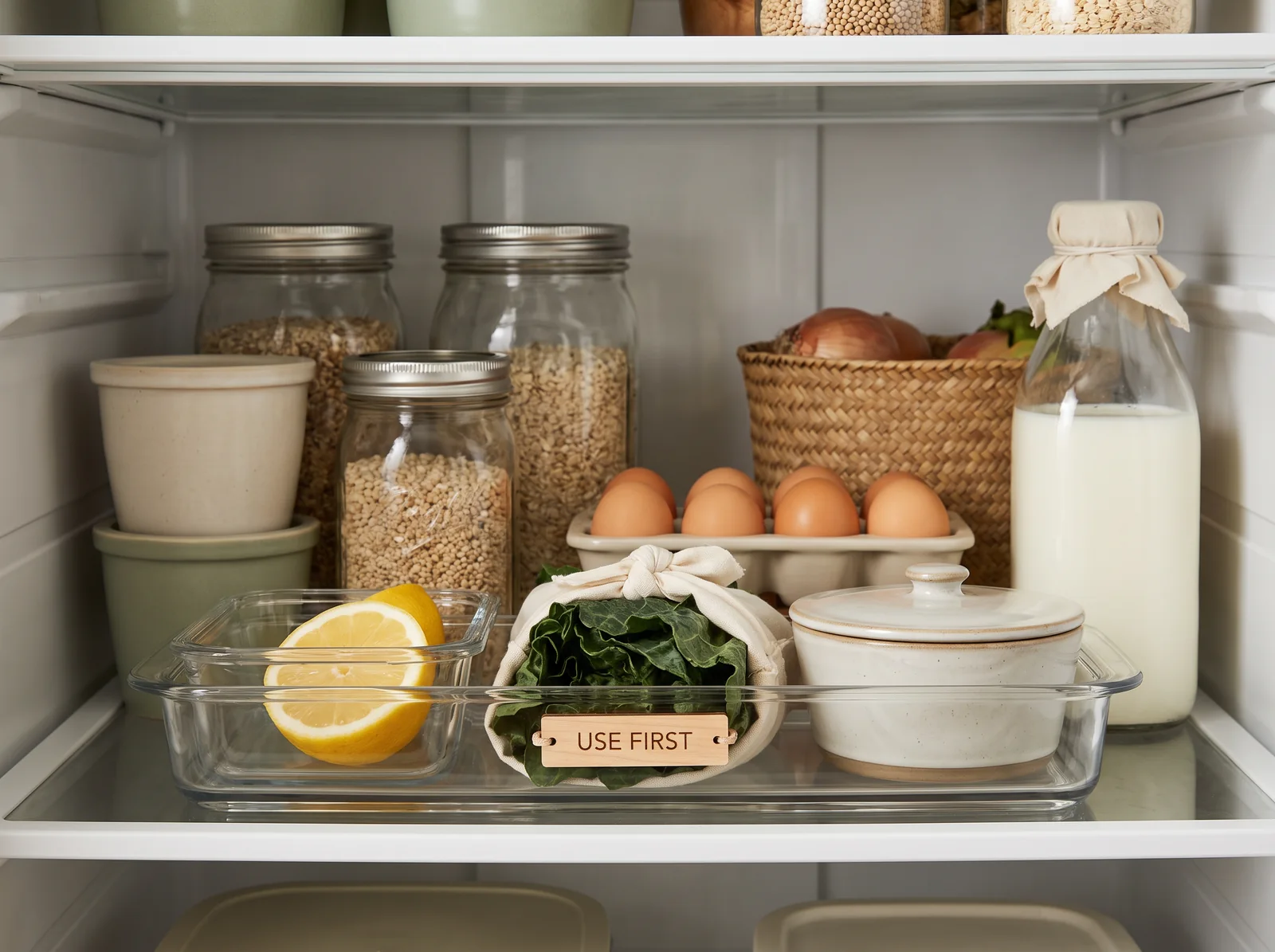
Start with a quick scan, not a full inventory
You can start with five minutes and three places: fridge, freezer, and pantry. Look for items that are open, already prepared, or easy to overlook. Do not empty every shelf or count every can. The aim is to spot a few useful starting points for the next meals.
Write each item with a next step. “Spinach” is vague. “Spinach, add to Thursday pasta” tells you what to do. “Rice, use for lunch or freeze if suitable” keeps more than one option open. If you are unsure about safe storage, check the food-specific guidance rather than guessing from smell or appearance.
Keep this list short. A long inventory can become another chore, especially if the household uses food faster than you can update it. Add items that need attention, then cross them off as they are used or the plan changes.
If your pantry shelves are part of the problem, a pantry zone and restock method can make stored ingredients easier to notice. Keep the use-first list where the person planning dinner will see it.
Match ingredients to meals with flexible slots
Choose meals that can absorb what you found, then keep one slot flexible. A flexible meal slot is a planned dinner or lunch you can move or adapt without rebuilding the entire week. It might become soup, a grain bowl, pasta, or a meal from a recipe your household already makes.
The dish depends on the ingredients, your preferences, and the food's condition. Treat ideas as prompts, not instructions to use something that may be unsafe. The FDA's guidance on reducing food waste and maintaining food safety explains why safe storage and use decisions belong together.
| What you find | Possible planning move | Keep flexible by… |
|---|---|---|
| A small amount of greens | Add them to a meal that already includes vegetables | Keep the meal's main ingredient unchanged |
| Cooked grains | Plan a bowl or side where they fit | Let the sauce or toppings vary |
| An open jar or container | Find a recipe that uses it, if appropriate | Avoid buying a second one until you check |
| Several odds and ends | Choose a meal that can take substitutions | List the ingredients before choosing a recipe |
These examples are illustrative. They do not set quantities or storage times. For a real week, write your own foods and choose meals that fit them.
Work through one changed week
Imagine you find spinach, cooked rice, and an open jar of sauce during your scan. The first plan is pasta with spinach and sauce, plus a rice bowl later in the week. Before shopping, check the recipes and pantry for what those meals still need.
Now suppose the evening for pasta becomes busy. Move that meal to the flexible slot and keep the rice bowl where it is. If the spinach no longer fits the plan, decide on another use or remove it from the list. Check storage directions before keeping or using any food. This example shows how a meal move can change the shopping list without rewriting every dinner.
| Item from the scan | First plan | If the week changes |
|---|---|---|
| Spinach | Add to the planned pasta | Move the pasta, then check whether the ingredient still fits |
| Cooked rice | Use in the planned bowl | Keep the meal in place or choose another planned use |
| Open sauce | Use in the pasta if the recipe calls for it | Remove it from the shopping list if already on hand |
The list is useful because each item has a next step and a fallback decision. It does not decide whether the food remains safe. For that, use the official guidance that matches the food and how it was stored.
Make the shopping list reflect the plan
Once you have picked meals, compare their ingredients with your scan. Add only what is missing for the meals you expect to make. This helps prevent a common disconnect: a menu says one thing, while the shopping list repeats items already at home.
For example, say your fictional household has rice, a partly used jar of sauce, and cooked vegetables. If a planned meal can use those items, list only the missing ingredient. If the week changes, move the flexible meal and revise the list before you shop again.
This small check works whether you use paper, a notes app, or a spreadsheet. If your list and meal plan live in one place, a grocery list template can help you keep planned ingredients and shopping notes together. Ultimate Meal Planner is a one-time spreadsheet by Cosmo Suite, not a subscription. It includes meal-planning, recipe, food-inventory, and shopping-list tabs, and its grocery list builds itself from the plan.

Keep an on-hand list small enough to maintain
An inventory only helps when you can keep it current. Track foods that change your next decision: opened ingredients, prepared food, freezer items you intend to use, or pantry staples that are nearly gone. Skip details that do not affect what you cook or buy.
You can use a short table with four columns:
| Item | Where it is | Planned next step | Status |
|---|---|---|---|
| Example: cooked rice | Fridge | Add to a planned meal | Planned |
| Example: open sauce | Pantry | Check recipe options | Decide |
| Example: frozen bread | Freezer | Use if needed | Available |
The entries above are examples, not a claim about your food. Update the status when you use an item, change the meal, or decide it no longer belongs on the list. A pantry inventory template shows one way to record on-hand items without turning the whole kitchen into a database.
What to do when the week changes
When plans shift, pause before adding another shopping trip. Recheck the use-first list, move a meal that still fits, and update the ingredients you need. If an item no longer fits any meal, decide what to do using its storage instructions and reliable food-safety guidance.
The plan should bend. If a late meeting replaces dinner at home, move that meal to another day or use the flexible slot. If someone else cooks, leave a short note about the ingredients you hoped to use. A visible note often works better than expecting everyone to remember the whole plan.
Avoid treating “use first” as “eat no matter what.” Planning can help food stay visible, but it cannot override safe storage guidance or a product's instructions. When you are uncertain, check the relevant official food-safety guidance or discard the food.
Where Ultimate Meal Planner fits
Ultimate Meal Planner is a one-time spreadsheet by Cosmo Suite, not a subscription. Its Meal Planner, Recipe Book, Inventory, and Shopping List tabs connect the planning steps described here. The Inventory tab records what is on hand, and the Shopping List tab builds from meals in the plan.
That connection can make the weekly check easier to repeat: look at what is available, choose meals, then review the items the list says you need. It does not predict what your household will eat, inspect food, or make food-safety decisions for you. Those decisions remain with you and official guidance.
If you want to see how a connected plan and list work together, Ultimate Meal Planner is the product page. Its meal-planner spreadsheet overview describes the tabs and format. You can also use a paper list and the same use-first routine without buying a tool.
How we made this
We fact-checked the planning and food-safety references against the U.S. Environmental Protection Agency's household food-waste guidance and the U.S. Food and Drug Administration's guidance on 30 October 2026. The examples are illustrative. They are not measured outcomes or food-storage advice. Ultimate Meal Planner is our product.
Frequently asked questions
What is the easiest way to reduce food waste at home?
Start with a short use-first list before shopping. Write down food that is already open, ripe, or left from a meal, then choose one or two meals that can use it. Keep the list visible and update it when plans change.
How can I use food before it goes bad?
Give each item a next step: use it in a planned meal, pair it with something you already have, freeze it if that suits the food and your plan, or decide it is no longer usable. For storage and safety questions, follow official guidance for that food.
How do I plan meals around food I already have?
Check the fridge, freezer, and pantry first. Pick one item or group to use, find a meal that fits, then add only the missing ingredients to your shopping list. Leave room to swap a meal if the week changes.
Should I plan a leftovers night every week?
It can help if your household has leftovers often, but the night does not need a fixed name or day. Add a flexible meal slot that can use what is ready, then move it when your schedule changes.
How do I reduce food waste when my plans change?
Keep one flexible meal in the week and update the use-first list before shopping. Move ingredients to another meal when they fit, and check storage instructions before keeping or using food. A plan is a guide, not a reason to ignore food safety.
Can a meal planner help reduce food waste?
A meal planner can connect recipes, planned meals, and a shopping list, which makes it easier to see what you intend to use. It cannot decide whether food is safe or guarantee that nothing will be discarded.
